Noise Removal Vst Plugins
Posted By admin On 19.12.20Reaper audio recording software is awesome, and is what I recommend to everyone. I use it every day. And I also seem to learn something new about it every day. It has an incredible noise reduction tool built right in that I just discovered recently.
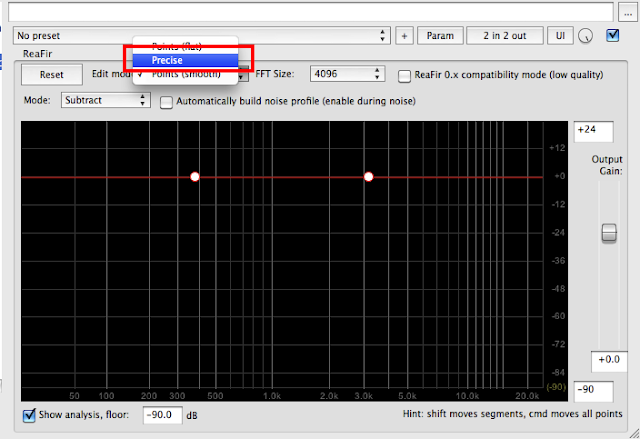
The reason I didn't know about it sooner is primarily due to the fact that reducing recorded noise is not its only or primary function. It just happens to do it REALLY well, and non-destructively (if that's not a word already, I hereby create it). The tool is called ReaFIR. I know! Who'd have thought to look for noise reduction editing chops under a moniker like that?
Upon its release, iZotope’s RX 6 – the previous version – was widely lauded for its. Bertom Denoiser is a free noise reduction plugin designed for music and post production / dialogue. A simple user interface which doesn't rely on 'learning' a static noise profile.; Fully automatable.; Low CPU usage so it can be used on many tracks.; Works in the time domain with zero latency.; Doesn't simply react to the raw input signal but tracks how the noise is evolving in each.
Review of What Noise Reduction Does
First though, let's do a quick review of what noise reduction does for us in the world of recording. There is almost always a bit of background noise in recorded audio. It is especially noticeable in recordings of just one thing, like a single voice.
The noise usually comes from a combination of stuff happening in the space/room where the recording takes place, and the electronics of the microphone and other gear involved. Recordings sound much better if you can reduce the noise, and that is what noise reduction tools are designed to do.
The typical method is to use an effect in an audio editor called 'Noise Reduction.' See my article How To Get Rid Of Background Noise In Audacity for how that normally works.
But since the noise and the voice are both together in the same recording, it isn't a perfect process. What noise reduction tools try to do is filter and removing as much noise as it can without also removing too much of the voice.
- 10 Best Noise Gate Plugins (VST,AU, AAX) of 2020 By Monji Omer / Best Plugins Working in the domain of audio, we can sometimes get a lot of useless and unpleasing sounds such as hissing, humming, clicking, and general unwanted elements.
- Voxengo Redunoise is a high-resolution noise reduction plug-in that provides a wide range of controls for reducing and eliminating noise. A comprehensive noise reduction system that goes beyond the capabilities of your average noise-ridding plug-in, it is a versatile solution that should find many uses in your productions.
In order to do this, the software has to know what noise looks like so it can separate it from the signal (voice). So you have to highlight a section of the recording where there is ONLY noise, and no voice, and feed that sample to the noise reduction tool. Once it has the noise profile, it can do its thing.
My favorite recording program, Reaper, is a digital audio workstation (DAW), which is a fancy way of saying full-featured multi-track recording program. For more information on why I love Reaper so much, see my article, Why Reaper Rocks As A DAW.
But for some reason, Reaper doesn't have an effect called 'Noise Reduction.' So how do you reduce noise in Reaper?
Enter ReaFIR
Reaper names its effect plugins by using 'Rea' as a prefix (for Reaper), and then the name of the function after it. So ReaFIR means Reaper FIR. So what does FIR mean? It stands for Finite Impulse Response. If you would really like to geek out on what it really means, including all the scary math involved, you can read about it at the Finite Impulse Response Wikipedia page. But the simpler definition for ReaFIR itself from the Reaper manual is:
ReaFIR is a EQ and dynamics plug-in that includes an FFT spectrum analysis window. Amongst other things it can be used as a precision EQ, a gate, a fast attack/release precision compressor, a noise reduction tool.
Obviously it is that last thing we're interested in. In the video below, I walk you through how to use ReaFIR to reduce the hiss noise that happened when I recorded a short voice over. BTW, this video was recorded several years ago (why it says from the 'upcoming' course). That course, The Newbies Guide To Audio Recording Awesomeness - Part 2, has now been around since 2012 and had been updated may times since.
How Does It Work?
So see it in action in the video above. But here is is a written summary of how it works. Once you have recorded some audio onto a track, click the FX button in the track control panel. Then select VST: ReaFIR from the Cockos collection of FX plug-ins.
Free Noise Removal Plugin
Next, go ahead and click the “OK” button and then close the ReaFIR window by clicking on the red X in the upper right corner.
Now just highlight/select a section of the voice-over audio that has no voice actually saying anything. In other words, pick a small area that was only noise.
Then click on the Toggle Repeat button (down by the Play and Stop buttons). This is important because it will prevent any of the actual voice signal being played when sampling the noise for ReaFIR. With that area still highlighted, click on the FX button again to open the ReaFIR window.
In the Mode window of the ReaFIR tool, select Subtract, and put a tick into the Automatically build noise profile box. Now hit the Space bar on your keyboard (which will play the audio, which is just the noise at this point). You'll hear it for a second and then it will be gone. That's ReaFIR getting rid of the noise. Now hit the Space bar again to stop playback.
The next part is very important! Uncheck the box that says Automatically build noise profile. Otherwise ReaFIR will try to grab your voice and anything else on the track, and treat it as noise. Once you've done that, go ahead and close the ReaFIR window. Now all you have to do is click on the Toggle Repeat button again to turn it off, and listen to the entire track.
Voila! The noise is gone and only the voice remains. Pretty darned cool huh? And I think the result is better than a lot of tools dedicated to removing noise. I didn't hear much, if any, of the weirdness that sometimes happens after noise reduction.
The audio takes on a kind of swirly, under-water-y artifact sometimes. But I didn't hear that in this example. However, there noise we got rid of was a low-level and consistent hiss type of noise.
The louder the noise and the more varied the noise (if it contains lots of frequencies and intermittent clicks, pops, etc.), the more likely you are to have that swirly artifact left over after noise reduction.

So now you know about the secret noise reduction tool at your disposal if you use Reaper. Use it wisely.
It’s always best to mitigate noise in your audio recordings before it can be picked up by a microphone. Unfortunately, this doesn’t always happen and it’s necessary to soften up that signal noise in post production. Most modern DAW’s (digital audio workstations, AKA audio production programs) use plugins to help with this process. And some DAW’s make finding those plugins a bit of a challenge. That’s why I’ve decided to post a quick tutorial on how to do noise reduction with the ReaFir plugin for Reaper.
Most unwanted noise in audio recordings tends to be constant throughout the length of the piece. Usually, these artifacts come from something in the environment such as a cooling fan or an electrical issue between the microphone and the sound input. When you have this type of continuous noise in a recording, noise-reduction plugins can come in handy as you’ll usually only need to set them once, and then they’ll apply the noise reduction to the entire track or noisy section.
To get started with noise reduction in Reaper, click the FX button on a track that’s got some unwanted noise. This will bring up the Add FX box, which shows all of the plugins and effects available to your Reaper installation. In the Filter list box at the bottom, type in “Reafir.”
Next, double-click the listing for the VST: ReaFir Dynamics Processor plugin. This will add the ReaFir plugin to your track and automatically open the plugin’s settings box.
From here, you’ll want to change the Mode drop down menu to Subtract and tick the checkbox next to that menu labeled “Automatically build noise profile (enable during noise).” These settings tell ReaFir that you want to remove certain frequencies from your recording and that you’d like the plugin to identify those frequencies automatically.
Now, align Reaper’s playhead so it’s at the beginning of a section of noisy audio but make sure that section doesn’t contain any speech or other wanted sounds. Otherwise, the plugin will think that the sounds you actually want to preserve are part of the problem and it’ll do it’s best to remove those, too! I also like to solo the troublesome track at this point, just so it’s easier to monitor when setting up the plugin.
Once the playhead is in place, click the play button (or press the space bar) and let the playhead go over at least twenty to thirty seconds of the recorded signal noise. Be sure to stop playback before you reach any of the desired sounds that are the intended focus of the recording. (If you were unable to stop playback in time, click the Reset button and start the process again.) Now, ReaFir has built a noise profile and automatically created a filter based on that profile.
Untick the checkbox next to the Mode menu but leave all of the other settings alone. Now, when you listen back to that track, you should no longer hear the unwanted noise.
Noise Reduction Vst Free
Posted by Shawn Thorpe External gpu for mac.